


Janet Lydecker, PhD, FAED, said that the medical field has traditionally trained specialists in eating disorders and specialists in obesity, and that these two groups have often seen patients and paths to care in different ways even though “there are a lot of patients who exist not in one field or the other, but who have both eating behaviors and weight as their treatment goals.”
Bridging that gap in awareness and in clinical practice was one of the goals of the Nov. 15 symposium From Prevalence to Practice: Recognizing and Screening Eating Disorders in Adults Seeking Obesity Treatment, which included practical guidance on screening for disordered eating, addressing risk before and after bariatric surgery, and a first-hand account of living with obesity and an eating disorder.
In addition to Dr. Lydecker, an associate professor in psychiatry at the Indiana University School of Medicine, the panel included Abby Braden, PhD, an associate professor at Bowling Green State University, and patient advocate Melinda J. Watman, RN, BSN, MSN, CNM, MBA.
Getting to the Overlap in Disordered Eating and Obesity

Both Watman and Dr. Lydecker emphasized the importance of effective screening when beginning therapy for either disordered eating or obesity.
“If you ask the wrong questions, you will not get the right answers,” said Watman, “And so, I urge you to use whatever tool you can, or whatever language you can, to find out really what is going on.”
Dr. Lydecker noted that the DSM-5 lists multiple formal feeding and eating disorders, such as anorexia, bulimia, binge eating, and avoidant/restrictional food intake disorder (ARFID). The presentation focused on these specific diagnoses which are the most common.
She added that screening is important because disordered eating isn’t limited to one population. Questions to screen a patient for eating disorders should focus on three areas: eating behaviors, such as eating in secret or emotional eating; compensatory behaviors, such as vomiting or skipping meals; and psychological experiences, such as body image concerns or family criticism of weight.
Dr. Lydecker gave an overview and comparison of six validated screening tools for eating disorders.
“There’s no perfect screener, but there are tools that can get you closer to understanding what’s going on, if anything, with disordered eating with your patient,” Dr. Lydecker said.
When talking to a patient about screening results, she encourages the use of open-ended questions and non-judgmental language.
If concurrent care for an eating disorder and obesity is recommended, there are multiple evidence-based treatment options, many of which are cognitive behavioral based, weekly outpatient models with a three- to six-month duration, Dr. Lydecker said.
Disordered Eating and Metabolic and Bariatric Surgery
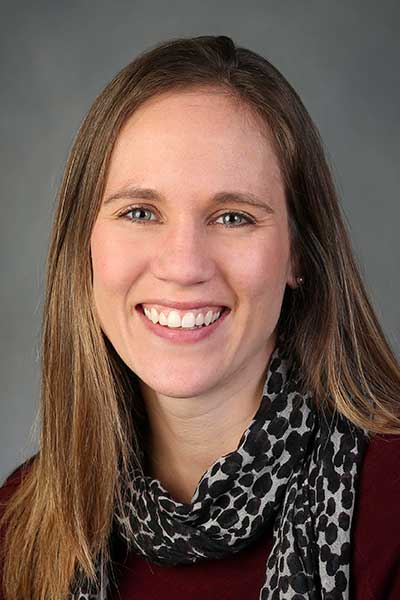
Dr. Braden, an associate professor at Bowling Green State University and a consulting psychologist at Wood County Hospital in Ohio, discussed the dynamics of screening for eating disorders and clinical decision-making in metabolic and bariatric surgery. The prevalence of disordered eating is higher among the population seeking metabolic and bariatric surgery than in the general population, she noted.
“When we look at data from the Longitudinal Assessment of Bariatric Surgery study cohort, we see that 15.7% of individuals met criteria for binge eating disorder and 2% for bulimia nervosa,” said Dr. Braden. “Our rates increase substantially (30-50%) when we look at subthreshold disorder eating symptoms.”
Eating disorders on their own, however, are not absolute contraindications to surgery.
“The main reason for this is because we have a pretty large body of literature showing that there are inconsistent associations between eating disorders before surgery and surgery outcomes, particularly when looking at BMI,” Dr. Braden said, sharing a meta-analysis of 19 studies showing that binge eating prior to metabolic and bariatric surgery had no significant effect on weight up to 60 months post-surgery.
Other psychosocial factors, such as tobacco use, high stress or inconsistent attendance at clinic visits, and risk factors should be part of the multidisciplinary decision-making surrounding candidacy for metabolic and bariatric surgery.
“Regardless of what decision is made, I think psychoeducation is extremely valuable,” Dr. Braden said. “We can use this conversation as an opportunity to provide information about eating disorders, eating pathology, and how it changes over time.”
She explained that rates of clinical eating disorders are low after metabolic and bariatric surgery; but when present, they are associated with lower weight reduction. This underlines the importance of postoperative care.
“We really need to think of the postoperative time as a crucial period of intervening and assessing disordered-eating symptoms,” Dr. Braden said. “Of course, our pre-operative assessments are useful and important, but I think in the post-operative period we may have more of an impact. We know that post-op patients are more likely to attend and complete adjunctive behavioral interventions, and we have data showing that the number of sessions attended postoperatively is associated with better weight outcomes.”
The Lived Experience
The session concluded with a firsthand account of the realities of living with obesity and an eating disorder. Watman, founder of Weighty Decision and emerita board member of the Obesity Action Coalition, detailed a childhood of restricted eating, weight-related name-calling by classmates, and a negative body image that perpetuated into adulthood. In her mid-forties, dissatisfied with the way she looked at 5-foot-1 and 225 pounds, Watman underwent metabolic and bariatric surgery.
“For me, it was the best decision,” she said. “However, my brain and my body did not keep pace, and so all of that self-stigmatization, all of that ‘It’s your fault,’ all of that questioning about how I looked, stayed with me while my body got smaller, and to this day it is there.”
While the surgery was a physical success, it didn’t address what Watman was dealing with mentally. She started restricted eating, then binge eating and purging. Nearly two decades after her surgery, her weight ultimately dropped to 85 pounds. After landing in the hospital after two different falls resulting in part due to malnourishment, two years apart, Watman completed a three-month treatment program for her eating disorder.
Three years later, she says her head was still not in sync with her body, and she began taking a GLP-1 to help her lose weight. She shared that she was able to access the medication online by being dishonest in the questions that were asked about her weight and medical history. She noted that she had side effects from the drug and knew that she needed to discontinue its use.
“I just came clean to my clinicians because I realized this was not a good choice,” Watman said.
She calls treatment for eating disorders a lifesaver while recognizing the diligence required to maintain her health.
“Occasionally, I lose a battle,” Watman said. “Overall, I’m winning a war.”
Her allies in the fight include a therapist, dietitian, eating disorder physician and a primary care physician.
“Together, we work on this all the time,” Watman said.
The session provided practical tips and evidence-based approaches to screening for food and eating disorders, but perhaps more importantly, left the audience with a increased understanding of the complexities and real-life impact of these psychological conditions.