What is on a person’s plate matters in the obesity care journey, but it is just one component—and an evolving one—of a wider dialogue about nutrition, weight loss, lifestyle, influences, and personal goals that clinicians should have with people living with obesity.
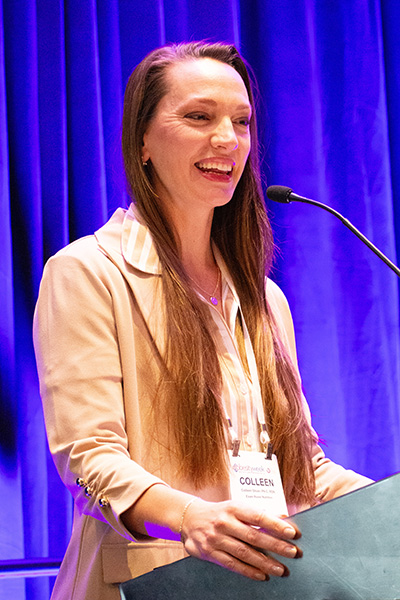
Colleen Sloan, PA-C, RDN
“Our counseling needs to begin with curiosity, not a prescription, and we need to start asking better questions because what we ask actually determines what we learn about our patient,” explained Colleen Sloan, PA-C, RDN, in her Key Lecture, The Evolving Plate: How Nutritional Needs Shift Throughout the Obesity Care Journey, on Nov. 14.
Sloan, an assistant professor at South University and the founder of the Exam Room Nutrition podcast, discussed how an equity-centered understanding of obesity can improve patient outcomes.
She outlined challenges and collaborative clinical approaches to promote nutrition during four distinct stages of obesity care through incretin-based therapies: pre-treatment, initiation and active weight loss, titration and treatment adjustment, and maintenance and transition.
Pre-Treatment
In the pre-treatment phase, before any diet recommendations are made, the clinician needs to gain an understanding of what and who is being treated—and why.
“Open-ended questions actually help the patient explain what they learned and know about themselves,” Sloan said. “They know what has worked in the past. We don’t know that. They also know what has not worked in the past and what felt realistic and what didn’t.”
However, it is critical to recognize the vulnerability many individuals feel when discussing their diet and weight history, she cautioned, recommending asking permission before broaching these topics.
“Someone’s body, their food choices, is extremely personal, and they have probably spent decades or years feeling judged because of it,” she said. “So, we want to make sure that they feel very comfortable and that this is a space that is safe. It also invites the patient into their care. This gives them the agency to make decisions for themselves and their body.”
Another key question to ask a patient embarking on a new treatment path is what they hope changes if the treatment works. This will help identify what the clinician and patient can track, beyond numbers on a scale, to determine whether the treatment is successful. These could be clinical endpoints, such as a target A1C number; a change in function, such as increased mobility; or an improvement in lived experience, such as clothing fit or social engagement.
Initiation and Active Weight Loss
At this point, an effective nutrition strategy to accompany the prescribed treatment can be created, and it should begin with preemptive education about what to expect concerning the patient’s appetite and eating, tolerance to the prescribed medication, and weight loss. For instance, fullness may come sooner and food preferences may change when a person takes an incretin-based medication. Nausea, constipation, diarrhea, and reflux are commonly reported side effects at initiation or dose escalation. And weight response varies among patients.
Our counseling needs to begin with curiosity, not a prescription, and we need to start asking better questions because what we ask actually determines what we learn about our patient.
— Colleen Sloan, PA-C, RDN
“Not every patient is going to be losing the 20% that we are expecting based on the clinical literature,” Sloan said. “Some patients may have a dramatically slower loss. Some might be non-responders, and it doesn’t mean that they are failures.”
Regardless of the pathway the medication works through, obesity drugs directly influence the biology affecting whether someone feels hungry, full, or interested in food. This, in turn, creates a need for a new prescription for nutrition.
“The best diet is one that a patient can maintain long term,” Sloan said. “We know that adherence is going to be the most important part of whatever dietary pattern you choose.”
She emphasized the importance of plate structure over portion sizes as a means to protect against medication-spurred nutrition deficits. Sloan said patients in this stage should focus on plates built around high-quality protein, color in the form of fruits and vegetables, fiber-rich carbohydrates, and fats from sources like nuts, seeds, avocado, and olive oil.
Titration and Treatment Adjustment
As a person progresses along a medication-assisted weight-loss journey, physiology and tolerance to treatment are likely to change, which could lead to dose escalation and new or renewed symptoms. Many of these may be gastrointestinal in nature and require advice on dietary changes.
Smaller, more frequent eating opportunities and separating fluids from meals can help with nausea and early satiety. Chewing food thoroughly and avoiding large or high-fat meals can help with diarrhea and reflux.
Protein intake and hydration also are key to overall nutrition in this stage.
“We’ve pivoted from ‘How do I keep escalating the dose?’ to ‘How does this plan need to change now that tolerance has changed because of some side effects?’” Sloan said. “It’s kind of survival mode during dose escalation. We want to provide enough hydration and nutrition to improve and maintain function.”
Maintenance and Transition
Sloan rates the maintenance and transition into the long-term treatment of obesity as the most emotionally challenging stage, and it can occur in two distinct environments. While continuing treatment, appetite suppression may persist, food noise may remain quieter and the individual may continue to be satisfied with smaller portions. While slowing or coming off treatment, hunger may increase, cravings may return, portion sizes may naturally increase and weight recurrence risk increases.
Sloan said at this maintenance stage, a plate should focus on satiety, structure, and stickability, centering the patient’s well-being and satisfaction.
“I hope the next wellness trend is joy and eating, because this is what helps patients keep this long term,” she said. “We need to allow them to eat foods that they enjoy. We need cultural foods to be part of it. Yes, convenience foods and flexibility, pleasurable foods.”
Importantly, Sloan said setbacks should be expected and should not be considered failure, but part of a longer process of adjustments necessary to preserve health gains when hunger and food noise change.
“I love for patients to just notice decisions that they’re making, notice how they’re feeling,” she explained. “We don’t need to fix it immediately, and we absolutely don’t need to judge. Just think of it like an experiment, and then this is something that we can use to learn and to grow.”
Sloan encouraged close collaboration between dietitians and providers to ensure that patients’ nutrition needs are met. She emphasized that, even with the same patient, these needs change during different treatment phases. She urged access to interventions that help patients optimize weight loss and maintenance while maintaining their nutrition status and their enjoyment of food.
ObesityWeek 2026 Goes Hybrid
Recognizing many conference registrants were affected by flight interruptions across the United States, ObesityWeek 2026 has transitioned to a hybrid meeting format, allowing participants to stay connected and access scientific content.
Registered attendees can view sessions live through the conference app or by using the desktop link below (go to the session listings and click the Watch Live button for a chosen session). Live sessions are available during their scheduled program times; replay recordings will be available as part of ObesityWeek OnDemand beginning late January 2027. Purchase ObesityWeek OnDemand through conference registration by Nov. 17.