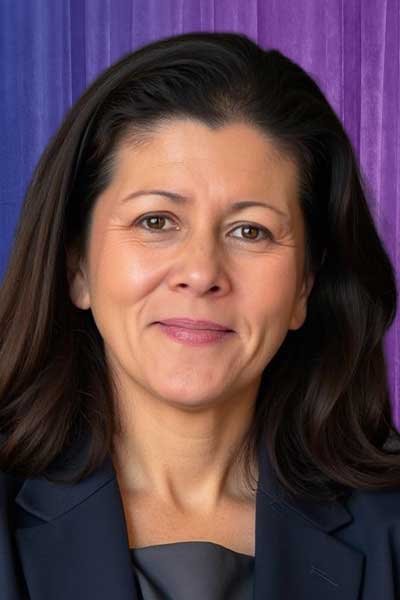
Robyn Pashby, PhD, FTOS, has spent much of her renowned career as a clinical and medical psychologist focusing on weight and how one of the most common measurements can manifest into multiple mental health burdens and cultural stigma.
Robyn Pashby, PhD, FTOS
When she delivers her ObesityWeek Key Lecture—Is there a Place for Body Positivity in Obesity Care?— on Nov. 14, Dr. Pashby will also share thoughts about the weight of words around obesity, how even ostensibly positive terms can take on different meanings, and what body positivity might contribute to obesity care as increasingly effective treatments change what is medically possible and what patients may expect from treatment.
“Obesity medicine and the term body positivity have been treated as if they are on different sides of a debate, but I want to question whether it is helpful to think of this as a debate,” Dr. Pashby said. “Part of that begins with the definition of body positivity and how we need to not make assumptions about what people who say they are practicing body positivity believe or don’t believe about obesity care and their own bodies.”
Dr. Pashby’s perspective on body positivity is informed by decades of clinical work as well as her service in obesity medical and advocacy groups such as the Clinical Practice Committee of The Obesity Society and national board of directors for the Obesity Action Coalition. She said she will share with her ObesityWeek audience the importance of understanding how the rise of body positivity was linked to movements such as fat-acceptance, social justice, and racial equity, and how these still-relevant concepts were co-opted in a performative manner by aspects of culture and social media.
“I want to walk through some specifics about how we need to be more aware of the cultural shifts in meaning and to reexamine the core of body positivity rather than immediately dismissing the concept based on how it has been shaped by trends and biases,” Dr. Pashby said.
One of the major impacts on body positivity, she noted, has been the rise of glucagon-like peptide-1 receptor agonists and other incretin-based therapies. Before the appearance of these medications, the body positivity conversation largely developed in a treatment landscape where, outside of bariatric surgery, the degree of weight loss was limited for most people and far below what can now be achieved through incretin-based therapies.
The thread running across obesity care and the changing concept of body positivity is that there has historically been discrimination against people in larger bodies and that we have a responsibility in obesity medicine to understand that the achievements we have made and the treatments we have today can carry and reinforce these cultural norms.
— Robyn Pashby, PhD, FTOS
“But now we’re talking about medications producing weight reductions approaching those historically associated with bariatric surgery, and that forces us to think differently about what patients may want and expect when they engage in obesity care and about what those changes mean in a culture that still places enormous value on thinness,” Dr. Pashby said, adding that researchers, clinicians, and advocates for those living with obesity are not immune to these cultural stigmas.
Being aware of cultural bias, Dr. Pashby said, will continue to be essential in obesity care, no matter what new therapies emerge.
“The thread running across obesity care and the changing concept of body positivity is that there has historically been discrimination against people in larger bodies and that we have a responsibility in obesity medicine to understand that the achievements we have made and the treatments we have today can carry and reinforce these cultural norms,” Dr. Pashby said. “As our treatments evolve, our thinking about bodies has to evolve alongside them.”
Dr. Pashby’s Key Lecture takes place Saturday, Nov. 14, 4:30–5:30 pm ET, at National Harbor 2-3 in the Gaylord National Resort & Convention Center.
Other ObesityWeek 2026 Key Lectures on Saturday include (all times are listed in ET, and all room locations are in the Gaylord National Resort & Convention Center):
Recognizing many conference registrants were affected by flight interruptions across the United States, ObesityWeek 2026 has transitioned to a hybrid meeting format, allowing participants to stay connected and access scientific content.
Registered attendees can view sessions live through the conference app or by using the desktop link below (go to the session listings and click the Watch Live button for a chosen session). Live sessions are available during their scheduled program times; replay recordings will be available as part of ObesityWeek OnDemand beginning late January 2027. Purchase ObesityWeek OnDemand through conference registration by Nov. 17.