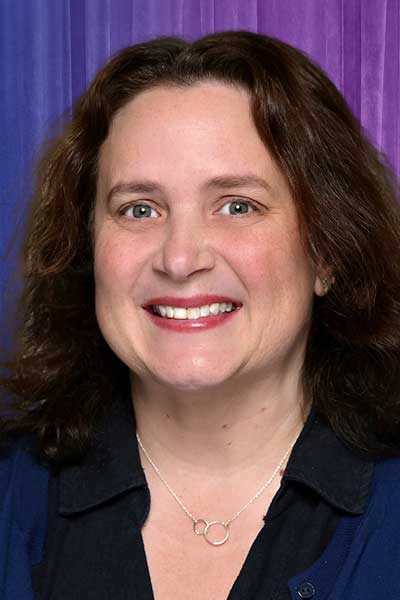
Kristy Townsend, PhD, professor in the Department of Neurological Surgery & Gene Therapy Institute and program founder/director, Research Accelerator Program to Translate, Innovate, Commercialize, The Ohio State University College of Medicine, will introduce attendees to translational research that her laboratory is doing involving preclinical rodent models and two therapies that target the estrogen signaling axis.
Estrogens are neuroprotective and improve metabolic health. The risks for both metabolic diseases and neurodegeneration, in the brain and in peripheral nerves, increase with age. The current research focus is mostly on brain risks such as dementia, Dr. Townsend said, but there’s also a higher risk for peripheral neuropathy in women after menopause, and estrogen therapies that don’t carry reproductive effects could be beneficial for men and women as they age.
“We’ve especially become interested in the fact that women after menopause are at higher risk for developing both Alzheimer’s and peripheral neuropathy,” Dr. Townsend said. “So, there’s something around that drop in estrogens that’s probably playing a role in losing some of that neuroprotection.”
Dr. Townsend will show data from preclinical target validation studies involving mouse models and some clinical data looking at the trends around peripheral neuropathy development across the menopause transition and with age between men and women .
Dr. Townsend said that her research into hormone therapies and peripheral nerve involvement builds off earlier works examining differences between men and women in weight gain, body fat storage, and insulin resistance.
Dr. Townsend noted that the two therapies she will discuss do act differently depending on sex but show promise for both men and women. This has led her research team to actively pursue translation of these treatments to human studies in the near future.
“I think these estrogen signaling targets carry relevance for lots of folks in the obesity research space, including potentially alongside incretin therapies, given how those are affecting men and women differently,” Dr. Townsend said. “We know there’s a strong interaction for women who are on estrogen therapy and also on a GLP-1. There’s a synergistic effect, so clearly reproductive hormones are playing a role in our response to other obesity therapies.”
These estrogen signaling targets carry relevance for lots of folks in the obesity research space, including potentially alongside incretin therapies.
— Kristy Townsend, PhD
Her lab is preparing to start large-animal proof-of-concept safety and efficacy studies on their two lead candidate drugs, one of which is a proprietary estrogen receptor beta targeting drug developed at Ohio State for which there are already some large-animal data. The other therapy has Food and Drug Administration approval for a different indication and may have a faster route to approval, including use in conjunction with other FDA-approved therapies.
“We’re not at the clinical stage yet with our treatments, but I will be talking a lot about the implications for peripheral neuropathy in humans that may not be front of mind yet, but are highly relevant to sex and age and hormone therapy status,” Dr. Townsend said.
Other ObesityWeek 2026 Key Lectures on Monday include (all times are listed in ET and all room locations are in the Gaylord National Resort & Convention Center):
Recognizing many conference registrants were affected by flight interruptions across the United States, ObesityWeek 2026 has transitioned to a hybrid meeting format, allowing participants to stay connected and access scientific content.
Registered attendees can view sessions live through the conference app or by using the desktop link below (go to the session listings and click the Watch Live button for a chosen session). Live sessions are available during their scheduled program times; replay recordings will be available as part of ObesityWeek OnDemand beginning late January 2027. Purchase ObesityWeek OnDemand through conference registration by Nov. 17.