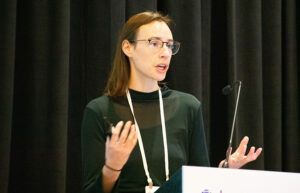

During the Nov. 14 ObesityWeek symposium, Functional Diversity of Adipose Tissue in Obesity: White, Brown, and Clinical Perspectives, speakers highlighted emerging evidence that adipose tissue is far more than a passive storage site for excess calories. Presentations focused on the distinct roles of brown, beige, and white fat depots and how a deeper understanding of adipose biology may lead to new approaches for preventing and treating cardiometabolic disease.

Paul Cohen, MD, PhD, head of the Weslie R. and William H. Janeway Laboratory of Molecular Metabolism and senior attending physician at Rockefeller University, highlighted brown adipose tissue (BAT) as a potential therapeutic target for improving metabolic health.
He reviewed the biological distinctions between white and brown fat, noting that white fat stores calories and brown fat dissipates energy through thermogenesis. Decades of preclinical research studies have shown that loss of thermogenic fat contributes to obesity, insulin resistance, hepatic steatosis, and increased visceral adiposity. The discovery of cold-inducible brown fat in adults transformed the field by raising the possibility that increasing BAT activity could improve human health, Dr. Cohen said.
His presentation included an expanded analysis of more than 100,000 individuals showing that people with detectable brown fat had significantly lower odds of type 2 diabetes, dyslipidemia, coronary artery disease, and other cardiometabolic comorbidities, independent of BMI. AI-based imaging analyses further revealed that greater BAT activity was associated with progressively lower disease burden and healthier white-fat distribution patterns, while suggesting that distinct BAT depots may serve unique clinical functions.
Dr. Cohen also discussed findings that angiotensin receptor blockers, particularly losartan, were associated with increased brown-fat activity. Subsequent mechanistic studies demonstrated that losartan could activate thermogenic pathways through PPARγ signaling, increasing UCP1 expression, brown-fat thermogenesis, and whole-body energy expenditure in experimental models.

“Fat might not just be part of the problem when we think about obesity-related diseases, but could also be part of the solution,” Dr. Cohen said.
Shingo Kajimura, PhD, professor at Harvard Medical School and Beth Israel Deaconess Medical Center, expanded on Dr. Cohen’s remarks, showing evidence that BAT acts as a powerful metabolic regulator through its ability to control the flow of important metabolites throughout the body. Dr. Kajimura’s research suggests that brown and beige fat can improve glucose tolerance and insulin sensitivity even when UCP1 is absent, indicating that other mechanisms contribute to these benefits.
Focusing on branched-chain amino acids (BCAAs), nutrients that are commonly elevated in obesity and type 2 diabetes, Dr. Kajimura reported that brown fat actively takes up and metabolizes BCAAs through the mitochondrial transporter SLC25A44 and facilitates the use of BCAAs in the generation of beneficial metabolites.
Experimental studies showed that disrupting BCAA metabolism specifically within brown fat reduced circulating beneficial metabolites, increased liver oxidative stress, and caused insulin resistance despite no changes in body weight or energy expenditure; human studies revealed similar findings.
“Having metabolically active tissue like brown fat is beneficial beyond burning calories,” Dr. Kajimura said. He compared brown-fat activation to exercise, noting that both appear to improve health by enhancing metabolite flux and maintaining metabolic balance rather than simply increasing calorie expenditure.
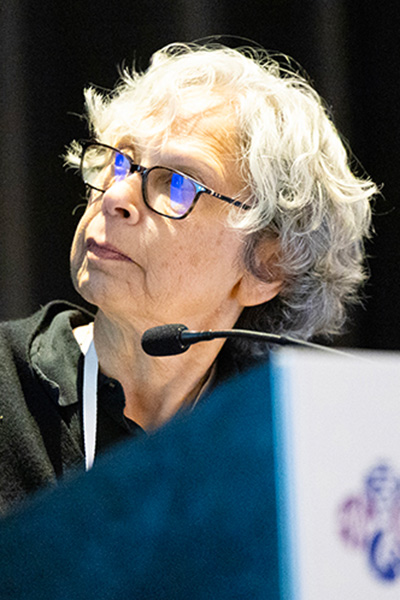
Susan K. Fried, PhD, FTOS, a visiting scientist in the Department of Nutritional Sciences at Rutgers Center for Lipid Research, reframed perceptions of white adipose tissue and the importance of where white fat depots are stored in a body.
“I’m going to convince you that white fat depots in humans are developmentally, biochemically, and functionally distinct,” Dr. Fried said. “And at the end of the talk, you will be happy because you will love your thighs.”
She explored why pear-shaped body fat distribution is associated with lower risk of type 2 diabetes and related metabolic diseases than apple-shaped body obesity. Drawing on clinical studies and emerging single-cell analyses, she showed that thigh fat is uniquely equipped for safe fat storage. Thigh adipocytes are more insulin sensitive, efficiently take up fat after meals, and help keep excess lipids away from organs where they can drive metabolic dysfunction.
Dr. Fried also highlighted evidence that thigh fat contains a larger pool of adipose progenitor cells, providing greater capacity to remodel, expand, and generate healthy new fat cells when additional storage is needed. In contrast, abdominal depots appear less capable of healthy expansion, increasing susceptibility to metabolic stress.
“Despite the fact that femoral thigh fat cells are larger than abdominal ones, they are better fat cells,” Dr. Fried said.
The evidence for the benefits of different types of adipose tissue created a compelling and engaging symposium, highlighting the importance of the future of research in this area.
ObesityWeek 2026 Goes Hybrid
Recognizing many conference registrants were affected by flight interruptions across the United States, ObesityWeek 2026 has transitioned to a hybrid meeting format, allowing participants to stay connected and access scientific content.
Registered attendees can view sessions live through the conference app or by using the desktop link below (go to the session listings and click the Watch Live button for a chosen session). Live sessions are available during their scheduled program times; replay recordings will be available as part of ObesityWeek OnDemand beginning late January 2027. Purchase ObesityWeek OnDemand through conference registration by Nov. 17.