
Obesity medicine has entered a period of unprecedented therapeutic progress. New medications can produce double-digit weight loss, endoscopic procedures continue to evolve, and bariatric surgery remains highly effective for many patients. Yet despite these advances, clinicians still face a fundamental problem: patients with seemingly similar obesity often respond very differently to the same treatment.
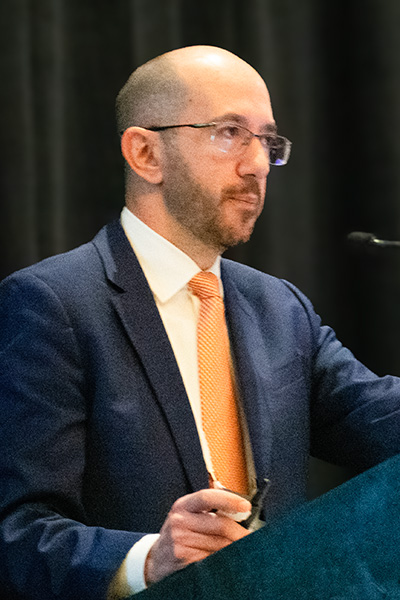
That challenge was the focus of a Nov. 15 Key Lecture, Why One Size Will Never Fit All—Biological Diversity in Obesity and Treatment Response, by Mayo Clinic obesity researcher Andres Acosta, MD, PhD, who argued that the future of obesity care depends on identifying the biological drivers underlying each patient’s disease rather than relying primarily on body mass index.
“The one-size-fits-all does not work and will not work in the future,” Dr. Acosta told attendees.
Drawing comparisons to oncology, he noted that cancer specialists routinely use molecular markers, genetics, and disease-specific characteristics to guide treatment selection, while obesity treatment often remains centered on BMI and associated comorbidities.
His research program has focused on classifying the drivers of obesity into biologically meaningful phenotypes. Four major categories have emerged: Hungry Brain, characterized by impaired satiation; Hungry Gut, marked by reduced post-meal satiety; Emotional Hunger, driven by reward and emotional eating pathways; and Slow Burn, associated with reduced energy expenditure and low lean muscle mass.
Central to Dr. Acosta’s work is the Hungry Brain phenotype. Using physiologic testing, genetics, and machine learning, investigators developed the Calories-to-Satiation Gene Risk Score (CTS-GRS), a biomarker designed to identify patients who require more food before feeling full.
He presented data that suggested these patients may respond particularly well to phentermine-topiramate but less favorably to GLP-1-based therapies. In one study, patients with Hungry Brain characteristics achieved substantially greater weight loss with phentermine-topiramate than those without the phenotype.
Dr. Acosta also presented data on tirzepatide that were consistent with previous studies of liraglutide and semaglutide. Investigators have found that patients with higher CTS-GRS scores generally achieve less weight loss on GLP-1 based therapies than those with lower scores, reinforcing the notion at biological differences influence treatment response even with highly effective medications.
Researchers subsequently incorporated both genetic and non-genetic factors to create the classification of CTS-GRS+, which was used to identify patients at high risk for poor response to tirzepatide. Importantly, the model was externally validated using data from the All of Us research cohort, suggesting the approach may be broadly applicable beyond a single institution, Dr. Acosta noted.
He also discussed recent findings involving patients with the Hungry Gut phenotype and described evidence that approximately 27% of patients with obesity may have rapid gastric emptying accompanied by impaired production of endogenous GLP-1 and peptide YY, suggesting a form of enteroendocrine dysfunction. These patients demonstrated particularly strong responses to tirzepatide in early analyses, potentially providing another pathway for personalized treatment selection.
He emphasized that true obesity phenotyping extends far beyond BMI. Clinicians should measure fat mass and fat-free mass. They should also assess glucose homeostasis, insulin resistance, inflammation, liver fibrosis, reward pathways, and energy balance while accounting for environmental and social determinants of health for a comprehensive assessment of metabolic health.
Dr. Acosta also highlighted a frequently overlooked challenge: treatment discontinuation. More than 60% of patients eventually stop obesity medications because of cost, side effects, or inadequate outcomes. To address this problem, his team analyzed real-world data from approximately 34,000 tirzepatide-treated patients and developed a model capable of predicting the likelihood and timing of weight regain after medication discontinuation.
Dr. Acosta argued that obesity care must evolve from trial-and-error prescribing toward biologically informed treatment selection. Better patient stratification, he suggested, could improve outcomes, lower costs, reduce stigma, and provide stronger evidence for insurers to expand access to obesity treatment.
ObesityWeek 2026 Goes Hybrid
Recognizing many conference registrants were affected by flight interruptions across the United States, ObesityWeek 2026 has transitioned to a hybrid meeting format, allowing participants to stay connected and access scientific content.
Registered attendees can view sessions live through the conference app or by using the desktop link below (go to the session listings and click the Watch Live button for a chosen session). Live sessions are available during their scheduled program times; replay recordings will be available as part of ObesityWeek OnDemand beginning late January 2027. Purchase ObesityWeek OnDemand through conference registration by Nov. 17.